The Stone That Named the House of David
@rickieshaver.6d39Documentary natural · 16:9 · 14 scenes · 2:220 views
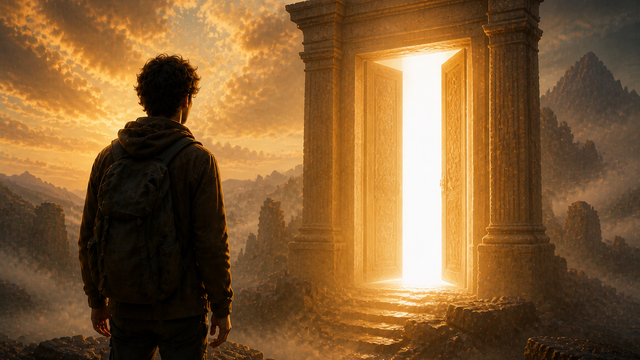
The Stone That Named the House of David is an AI-narrated story video made with TubeTube in the Documentary natural visual style, 2:22 long across 14 scenes. Scene images were generated with GPT Image 2 · Low and animated with Hailuo 2.3 · 768p, narrated by the "Isla - Youthful, Relaxed, and Warm" voice. The full recipe below is remixable: reuse the same style and settings with your own words.
Scenes 14 frames
The exact frames generated for this video - remix the recipe to make your own with the same look.
The story as narrated
For centuries, the name of David survived in the Bible—but nowhere else that archaeologists could clearly identify. That absence raised a provocative question: Was David a historical ruler, or had later generations transformed a distant figure into a national legend? Then, in 1993, excavators at Tel Dan in northern Israel uncovered a fragment of black basalt. It had once belonged to a royal victory monument, but the monument had been smashed and its pieces reused as building stone. Additional fragments followed. Only thirteen incomplete lines remained. Yet one sequence of letters immediately stood out: B-Y-T-D-W-D. In ancient Aramaic, most scholars read them as “House of David”—the name of a ruling dynasty. The inscription was not written by Judah. It appears to preserve the boast of an enemy king—most likely Hazael of Damascus—celebrating victories over the king of Israel and a king belonging to the House of David. That makes the stone extraordinary. By the ninth century BC, a neighboring kingdom was identifying Judah’s royal line by the name David. But archaeology requires restraint. The inscription does not describe David’s life. It cannot prove every biblical story about him, the size of his kingdom, or the splendor of his court. Some alternative readings have been proposed, although the large majority of specialists consider “House of David” the most convincing translation. What the stone provides is narrower—but still powerful: evidence that a dynasty associated with David was known outside the Bible within roughly a century and a half of the period traditionally connected with him. And the most striking part may be the identity of the witness. This was not praise written by David’s descendants. It was not scripture copied by believers. It was an enemy’s monument, carved to glorify a foreign king. The conqueror intended to preserve his own victory. Instead, his shattered monument preserved the House of David.
The prompts copy anything
Image style
Natural-light documentary photography, honest unposed moments, soft window light, true colors, quiet emotional intimacy.
Scene prompt example 1
Close-up of a large, ancient leather-bound Bible on a wooden table in a dimly lit library. The camera slowly pans to an empty, dusty archaeological trench in the desert.
Scene prompt example 2
Silhouette of an ancient king with a crown standing on a distant rocky hill at sunset, fading into light. The scene transitions to a sandy archaeological dig site under a bright daytime sun.
Scene prompt example 3
Close-up of hands wearing leather gloves carefully brushing dirt away from a broken fragment of black basalt rock. The setting is a sunny, rocky excavation site.
Scene prompts are written automatically from your lyrics - these are examples from this video.
Recipe
TypeNarrated tale
Format16:9
VoiceIsla - Youthful, Relaxed, and Warm
Image styleDocumentary natural
Image providerGPT Image 2 · Low
Video engineHailuo 2.3 · 768p
Scene duration10s
Upscale-
Scenes14
Credits spent0
Sign up free to remixCreate your free account (1,000 credits included) and remix this recipe with your own words.